

EPG Assets & Facilities
EPG is the Army’s Command, Control, Communication, Computer, Cyber Defense and Intelligence (C5I) Developmental Tester headquartered at FT. Huachuca, Arizona. EPG conducts bench tests, lab tests, field tests, and large-scale, geographically distributed systems of systems tests. EPG employs a mix of live and simulated instrumentation and assets.

Sprawling over approximately 300 acres, the ATF is composed of five main components:
- 50ft. and 75ft. Arc Ranges
- 100 ft. Low Observable Tower
- 2 outdoor positioners with large, 60 & 80-ton load capability turntables
- 40-ton load capacity Compact Range
- Near-field Range, with planar, cylindrical /spherical coordinates
- Outdoor beacon locator range
- 100 ft. telescoping antenna mast
These assets provide 20 MHz – 50 GHz frequency range testing capabilities for directional testing, emitter dentification, Far-Field antenna testing and more.
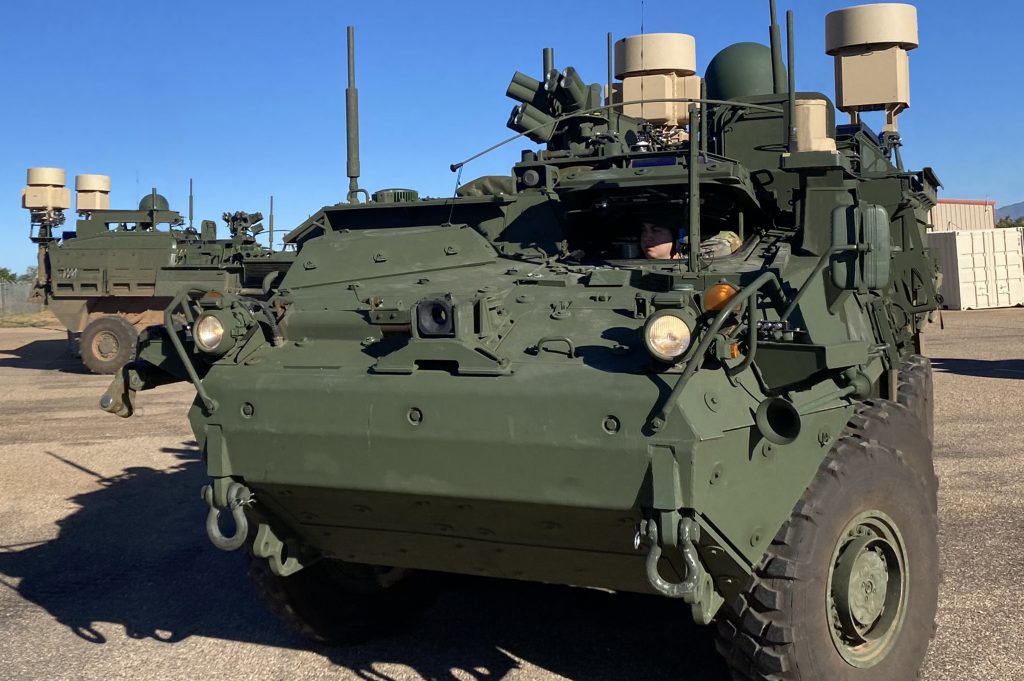
The Blacktail Canyon E3TF Team applies over sixty years of combined E3 experience and is Instrumented to test all Military E3 standards & requirements. The E3TF is the only Gov’t certified TEMPEST test facility in the world, employing certified TEMPEST Level II Professionals and National Association of Radio and Telecommunication Engineers (NARTE) – Electromagnetic Capability (EMC) certified specialists. We are qualified & equipped for multi-disciplinary roles, including EMI, EMC, TEMPEST & ITL.
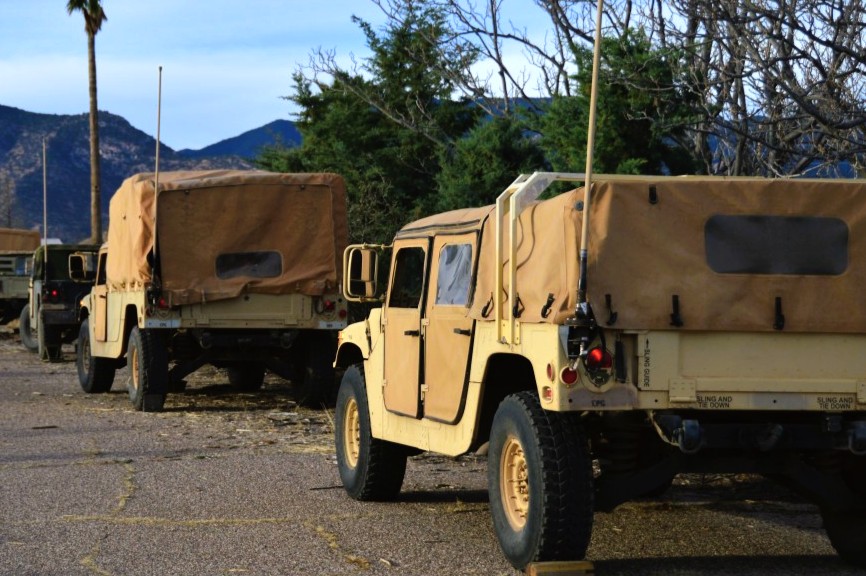
The CS&N’s State-of-the-art C5I Test Bed can assess emerging & legacy C5I technologies,
providing a full range of net-centric lab facilities and environments including:
- 1 static distributed TOC / 1 mobile TOC
- Over 100 NSA-approved Test Sheds
- Venue & Capability testing for new tactical communications equipment
- 27-acre-secure Compound / desert terrain for long-range testing
- Mobile/static tactical operations
- Rapid reconfigurable SoS Testing
- Network centric radio frequency capability

COSPAS-SARSAT is an international, humanitarian satellite-based search and rescue system. The United States, Canada, France and Russia developed the system in 1979; it became fully operational in 1984.
EPG is the sole emergency beacon certification facility in the U.S.; it is the only certification facility in the Western Hemisphere. COSPAS-SARSAT provides global air, sea, and land search and rescue coverage using two satellite systems: Low Earth Orbit System for Search and Rescue (LEOSAR), Medium-altitude Earth Orbit Search and Rescue (MEOSAR), and Geostationary Search and Rescue (GEOSAR).
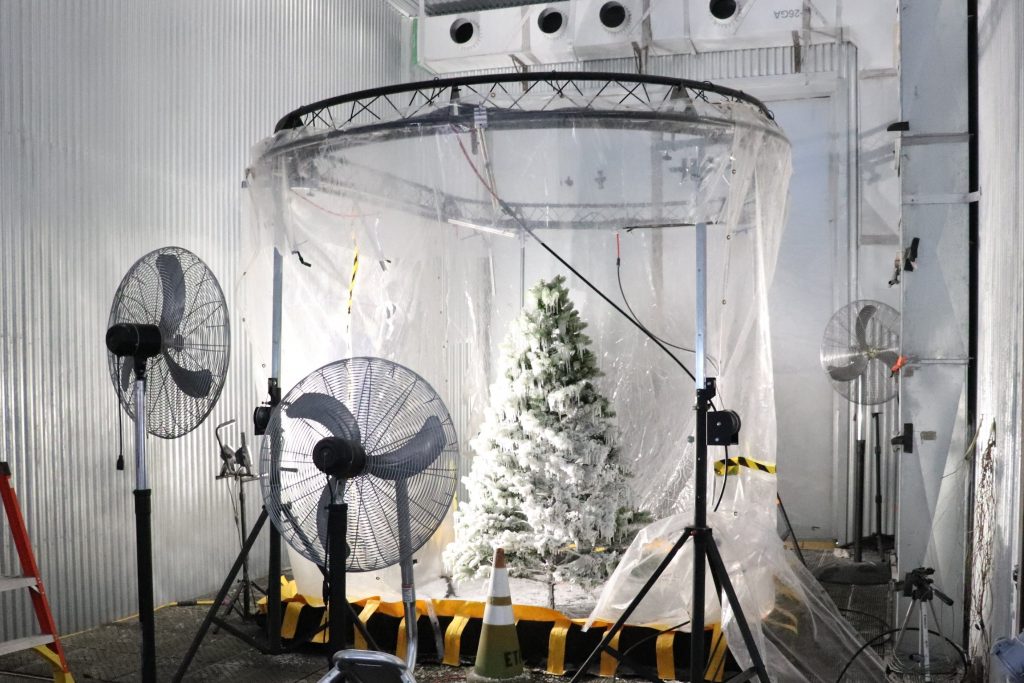
The ETF conducts tests in a multitude of simulated environments, analyzing the impact on equipment throughout emulated life cycles. Complete climatic and dynamic testing is available, including extreme temperatures, high-velocity winds, full spectrum solar radiation, vibration/shock, fluid contamination and more. Environmental test conditions can be combined to emulate real-world situations. The ETF provides real-time/post-test analysis utilizing specialized instrumentation and variable capacity (2 to 5,830 cubic feet ft³) climatic chambers. The ETF meets MILSTD- 810 and DO-160 requirements, providing environmental conditions that are controlled and 100% repeatable.

The GPS Test Facility can perform a variety of tests using the GPS Instrumentation Suite (GPSIS), the GPS Dynamic Array Test Facility, and specialized data collection, reduction and analysis tools. Fort Huachuca’s 80,000 acres of test range allows testing in a variety of real-world environments, while the GPSIS and Dynamic Array provide lab-based modeling and test range simulations under realistic live sky conditions. We provide truth reference system data in support of Developmental & Operational Field Test events and are well known and respected in the GPS Test community with over 30 years of experience.
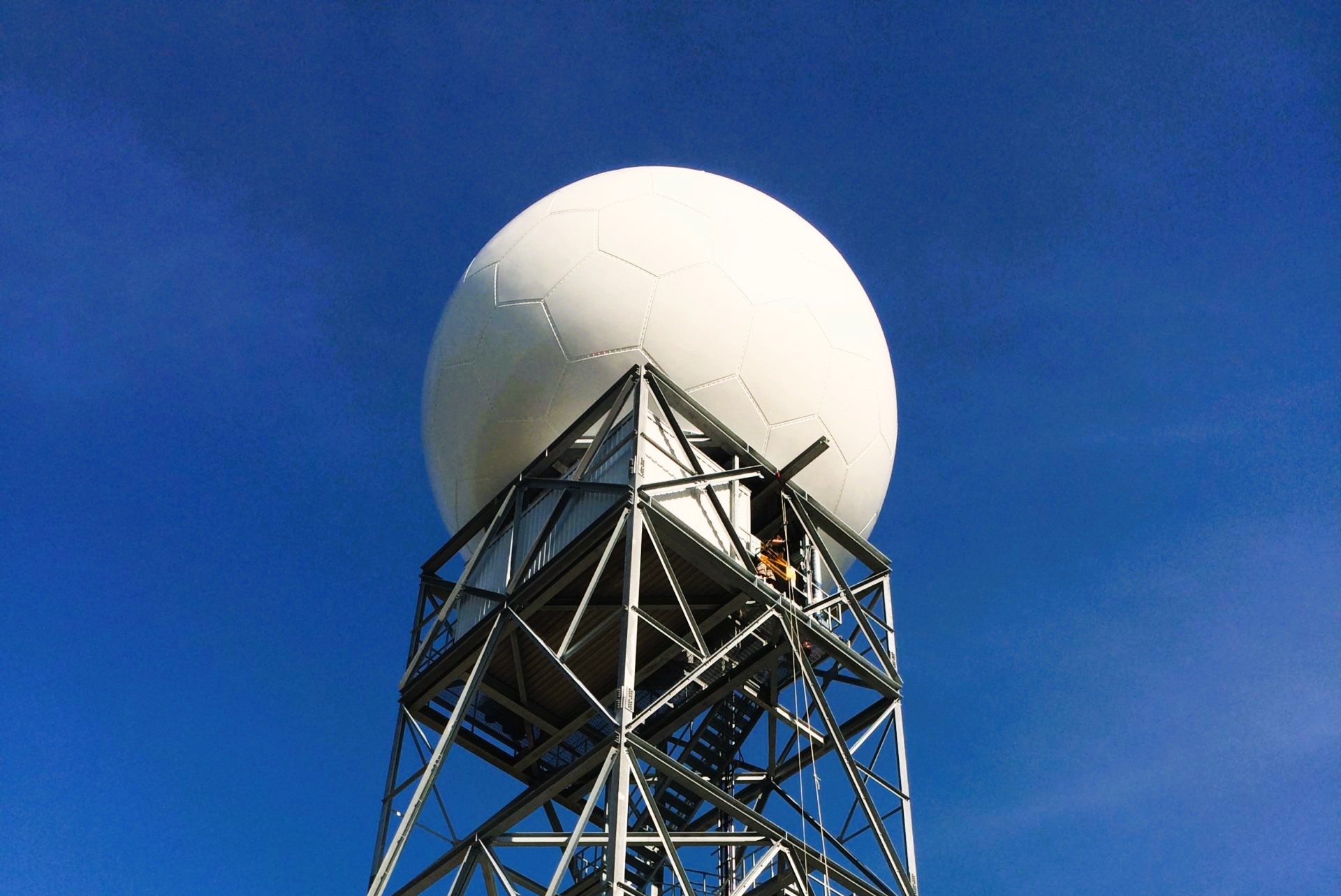
The mission of the EPG Meteorological (MET) team is to collect, archive, and analyze weather information to support military and civilian test operations. The team provides climatology, daily forecasts, radar weather, watch/advisory/warning notifications, and upper air data for EPG planners, testers, and post operations. Services consist of test planning, test support (forecasting, meteorological measurements, and atmospheric characterization), test analysis, and test data reports.

The T2D2 lab provides advanced technology development solutions to enhance the effectiveness of EPG’s test equipment and operations. The lab integrates, synthesizes and applies innovative technologies to extend testing capabilities, including embedded processors, printed circuit board (PCB) designs, microscopic board inspections, ruggedized enclosure designs, 3D printing, powder coating and cable fabrication. T2D2’s innovative solutions helps EPG test officers to meet the complex, often geographically dispersed and environmentally extreme demands generated by C5I, Electronic Warfare and APNT systems testing.
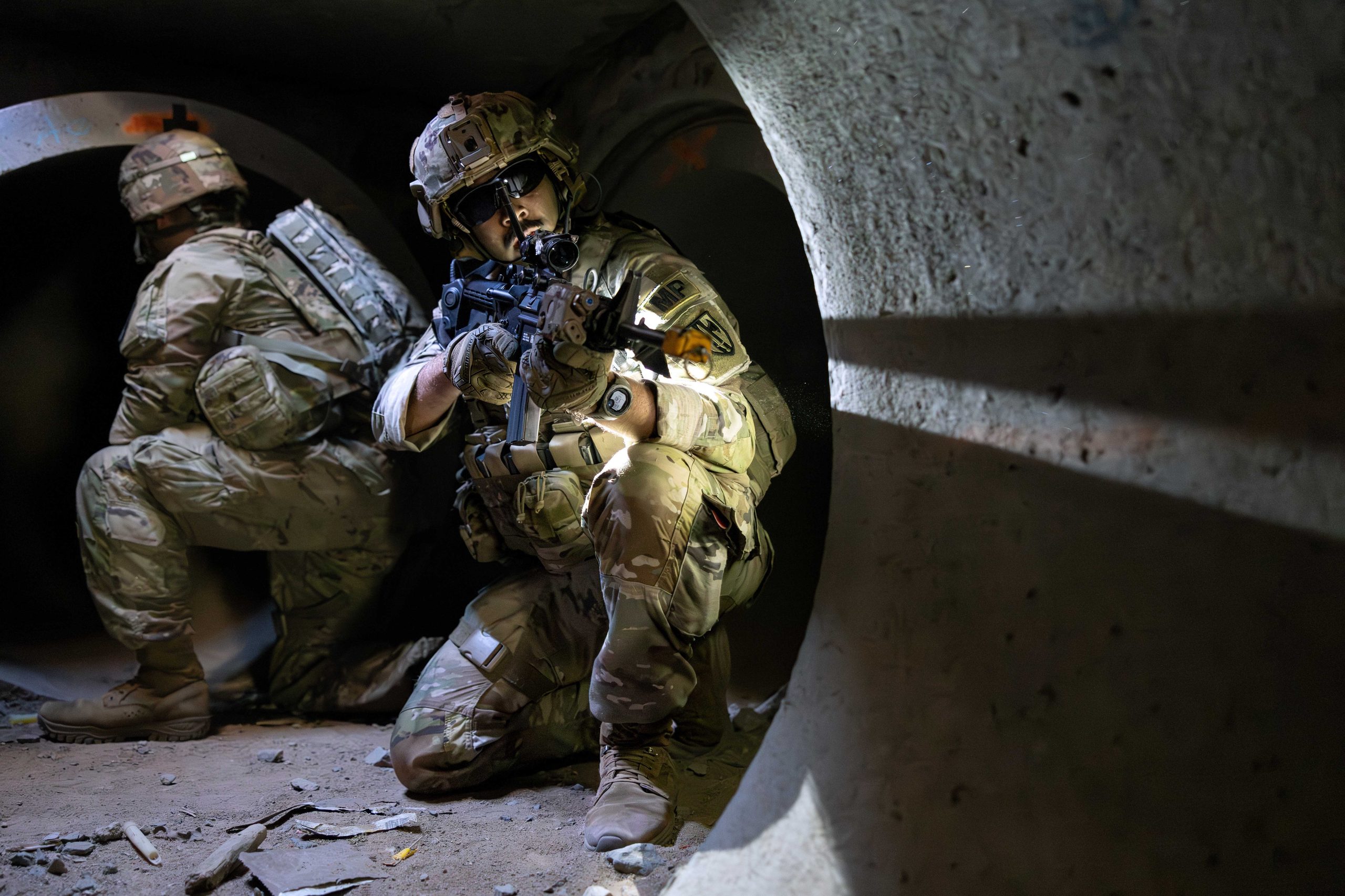
The TSMO test bed at the U.S. Army Electronic Proving Ground is a multi-domain operations (MDO) environment designed to integrate and evaluate Army threat systems in a realistic, operational setting. TSMO, part of the U.S. Army’s Capability Program Executive Simulation, Training, Test and Threat (CPE ST3) (formerly known as Program Executive Office Simulation, Training and Instrumentation (PEO STRI)), provides rapid, adaptive all-domain threat operations and lifecycle management for realistic test, training, and experimentation.

The EPG TEMPEST lab is the only NSA certified lab within the DoW, which ensures National Security Information (NSI) will not be compromised by exposure to unauthorized interception of Compromising Emanations (CE) from Classified Information Processing Systems (CLIPS). TEMEPST testing is primarily done, but not limited to, anechoic chambers. When a vulnerability is identified, testing transitions to outdoor environments to better evaluate its impact under real-world conditions.

The ITL is part of the U.S. Army Electronic Proving Ground’s E3 Effects Test Facility (Blacktail Canyon) at Fort Huachuca, where the Army has tested Intelligence and Electronic Warfare technology for over 60 years. The National Telephone Security Working Group (NTSWG) has selected the U.S. Army Electronic Proving Ground’s Interagency Telephone Laboratory as the only certifying laboratory for telephones and systems used in secure environments.by the DoW.

The Distributed Software Testing and Integration Laboratory (D-STIL) located at EPG Headquarters in Ft. Huachuca provides Software Testing, Verification and Validation (V&V), and System Integration services to EPG customers. D-STIL Services include but are not limited to COTS and GOTS evaluation services, distributed and isolated software testing, integration testing, regression testing and acceptance Q/A testing among many others.